A First Coloring Kit for Adults: What's Useful to Buy
As an Amazon Associate I earn from qualifying purchases.
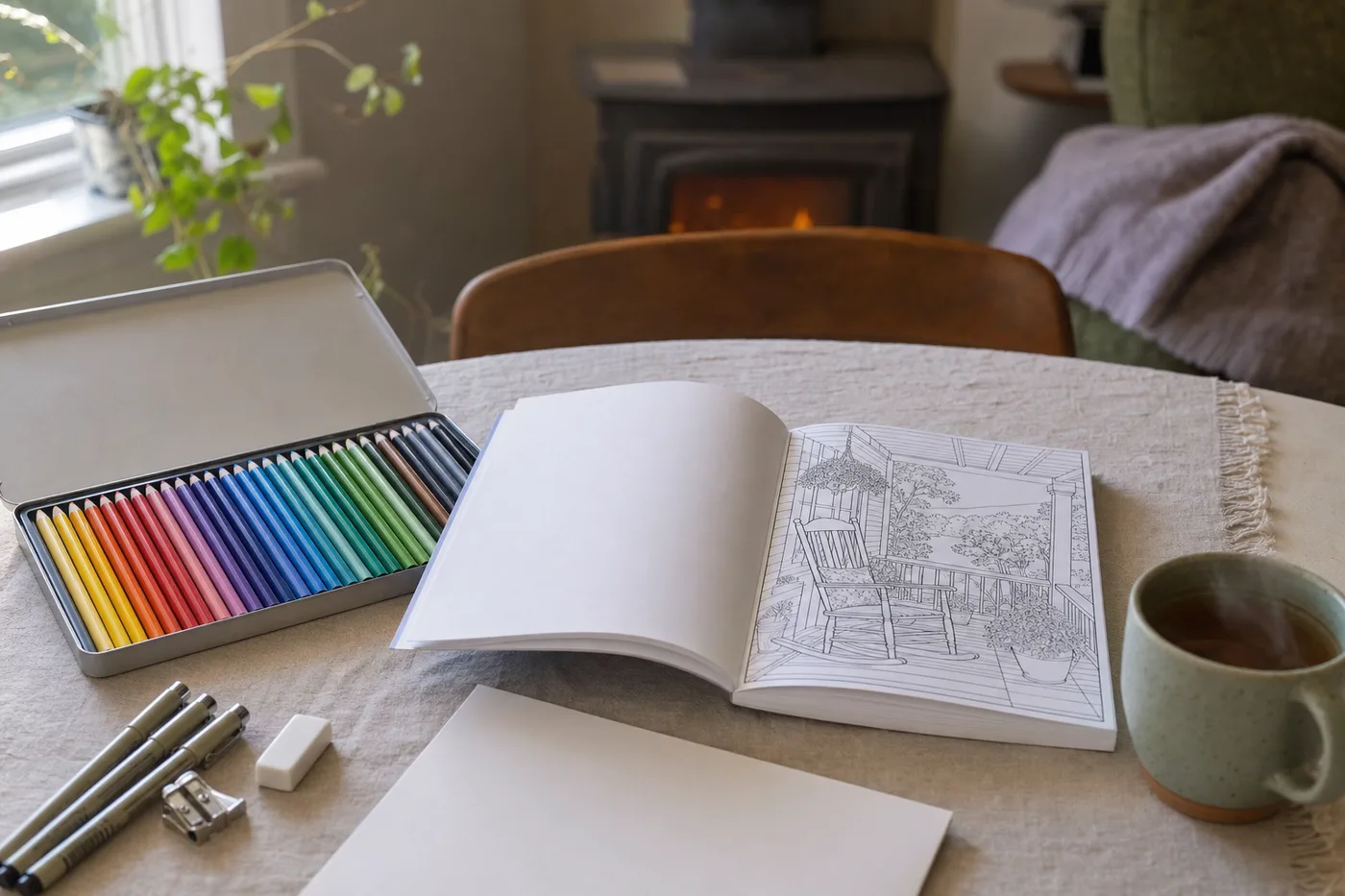
The fastest way to fall out of love with coloring is a box of hard, scratchy pencils that barely leave color no matter how hard you press. You can skip most of what fills the coloring aisle (150-color tins, blender pens, markers in three kinds) and still start with tools that feel good in your hand. Here's a small, affordable starter kit, and what to look for in each piece.
The kit at a glance
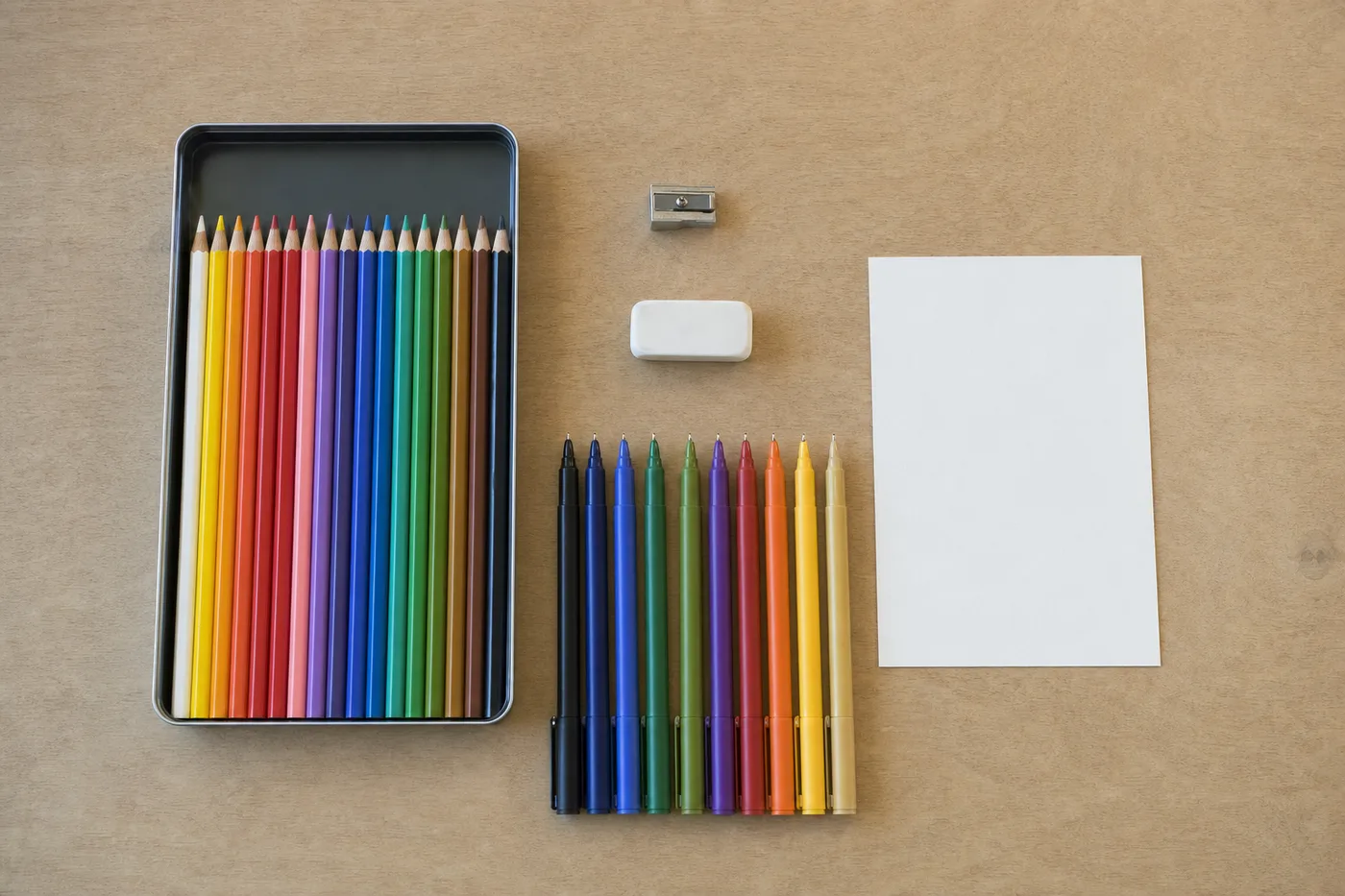
| Item | Why | How much to spend |
|---|---|---|
| A 24 to 48 colored pencil set | Does almost everything | Most of your budget |
| A good handheld sharpener | Saves pencils | A little |
| A plastic eraser | Lifts light mistakes | Very little |
| A small set of fine-tip markers or gel pens (optional) | Tiny details, bright accents | A little, if you want them |
| A backing sheet | Protects the next page | Nothing, if you have cardstock at home |
1. Colored pencils: 24 to 48 colors
Spend most of your budget here. You don't need 100 colors: 24 to 48 gives you plenty of range, and layering two colors makes many more.
What matters:
- A soft core. Soft pencils lay down color easily without pressing hard, which is easier on the hand. Hard school pencils make you press hard for pale color, and that gets old fast.
- Pencils sold individually too. You'll use up greens and browns first. Brands that sell single pencils let you replace just those.
- Round or hexagonal barrels that feel comfortable for an hour, not ten minutes.
What can wait: artist-grade sets and oil-based pencils. They're lovely, but a mid-range soft pencil is plenty to start.
Our pick: Prismacolor Premier soft core, 24 colors.
2. A sharpener that doesn't eat pencils
A cheap sharpener with a dull blade snaps soft pencil cores over and over. A small metal or two-hole handheld sharpener with a replaceable blade, or a sharpener made for colored pencils, pays for itself quickly.
What matters: a sharp blade, a lid or container to catch shavings, and a hole size that fits your pencils.
Our pick: Peter Pauper Studio Series 2-hole sharpener.
3. An eraser
Colored pencil doesn't erase completely, but a light first layer lifts well enough to fix a stray mark. A white plastic (vinyl) eraser works better on colored pencil than a pink rubber one. A kneaded eraser lightens an area without scrubbing.
Our pick: Amazon Basics white erasers.
4. Fine-tip markers or gel pens (optional)
You won't need these for a first book, but they're handy for tiny details like eyes, lettering, or flower centers, and for bright accents on top of pencil. You don't need a big set, but a dual-tip set gives you a fine tip for details and a brush tip for bigger areas.
What matters: fine tips (0.4 to 0.8 mm), water-based ink for less show-through, and colors that match your pencils' palette.
Our pick: 36 dual-tip markers with fine and brush tips.
What can wait: alcohol markers. They're a different skill, they soak through most paper, and they're expensive. Colored pencils or markers compares the two.
5. A backing sheet
Slip something firm behind the page you're coloring. It gives the pencil a smooth, even surface (a bumpy table or the page underneath shows through as texture) and keeps any marker ink off the next page. A piece of cardstock or a clear plastic sheet works. How to keep marker color from reaching the next page explains more.
What else can wait
- Blender pencils and blending solvents. Try layering with your regular pencils first.
- Pencil cases, rolls, and organizers. A zip bag or the box the pencils came in is fine to start.
- Special lamps. A window by day and a regular lamp at night do the job.
Start with a page that fits
Your first book will go best with clear lines and room to color. The Art of Doing Nothing has porches, hammocks, window seats, and an open garden gate, drawn with bold lines and wide spaces. Three pages from its printable collection are free, and none of them are in the book.